
AMM #181: A Sand-Table, Watching the Stars, & Much More
This month's Maker Meetup featured many cool, technical projects. As always, pizza was served, and this time Jan brought some leftover candy from the carnival celebrations.
Martin brought a big project called DuneWeaver: A table where, under a glass plate, a small ball rolls around in sand to create beautiful patterns. The project consists of an Ikea table, a Rasperberry Pi, many 3D-printed parts, a clever mechanical solution with two stepper motors controlling a magnet below the sand, and, of course, some RGB LEDs. He will continue tinkering with it and polishing it, and maybe bring it again next month.


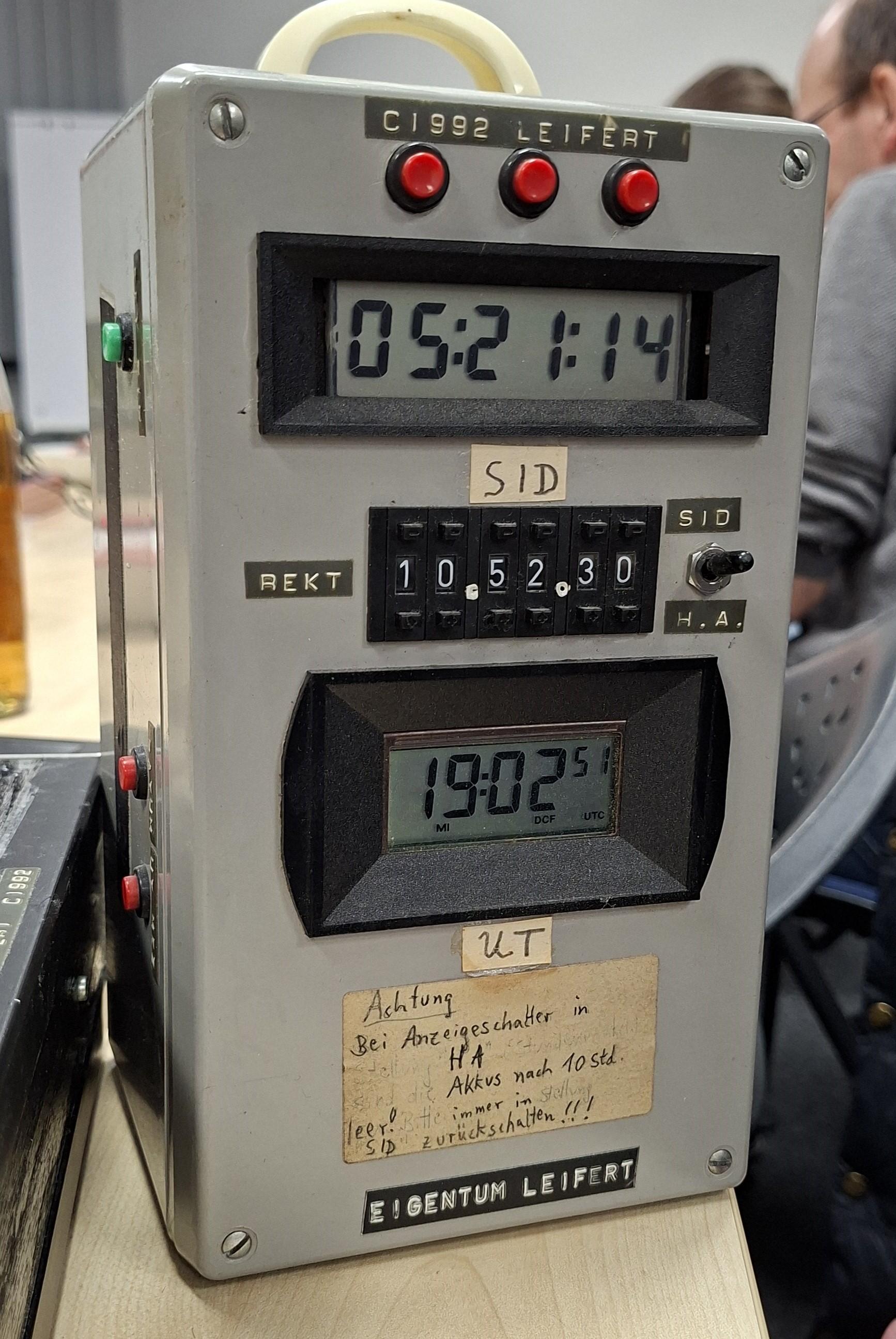
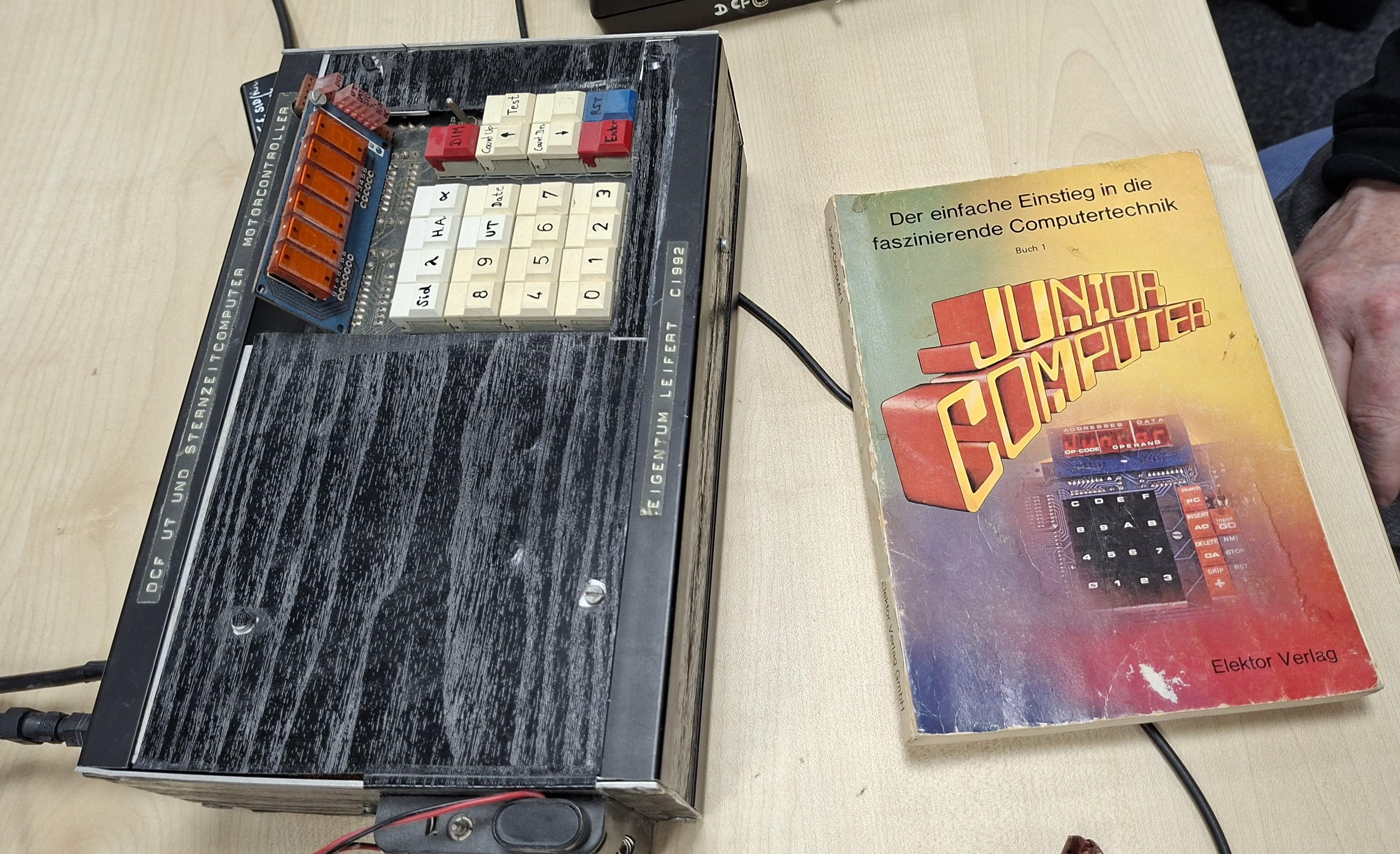
Roger brought three different solutions to the same problem: finding the hour angle you need to set your telescope to when wanting to look at a specific point in space. The most left, designed and built by Roger some years ago, version uses only digital ICs to use the sidereal time and right ascension (one coordinate of the point you want to watch) to calculate the hour angle. The middle, newer version is digital and uses a Junior computer programmed in machine code to do the same calculation. The right one is based on C-Control and uses Basic to achieve the same computation. And if you want a fourth, modern solution, Roger also has an app that uses his GPS to help with the calculation.

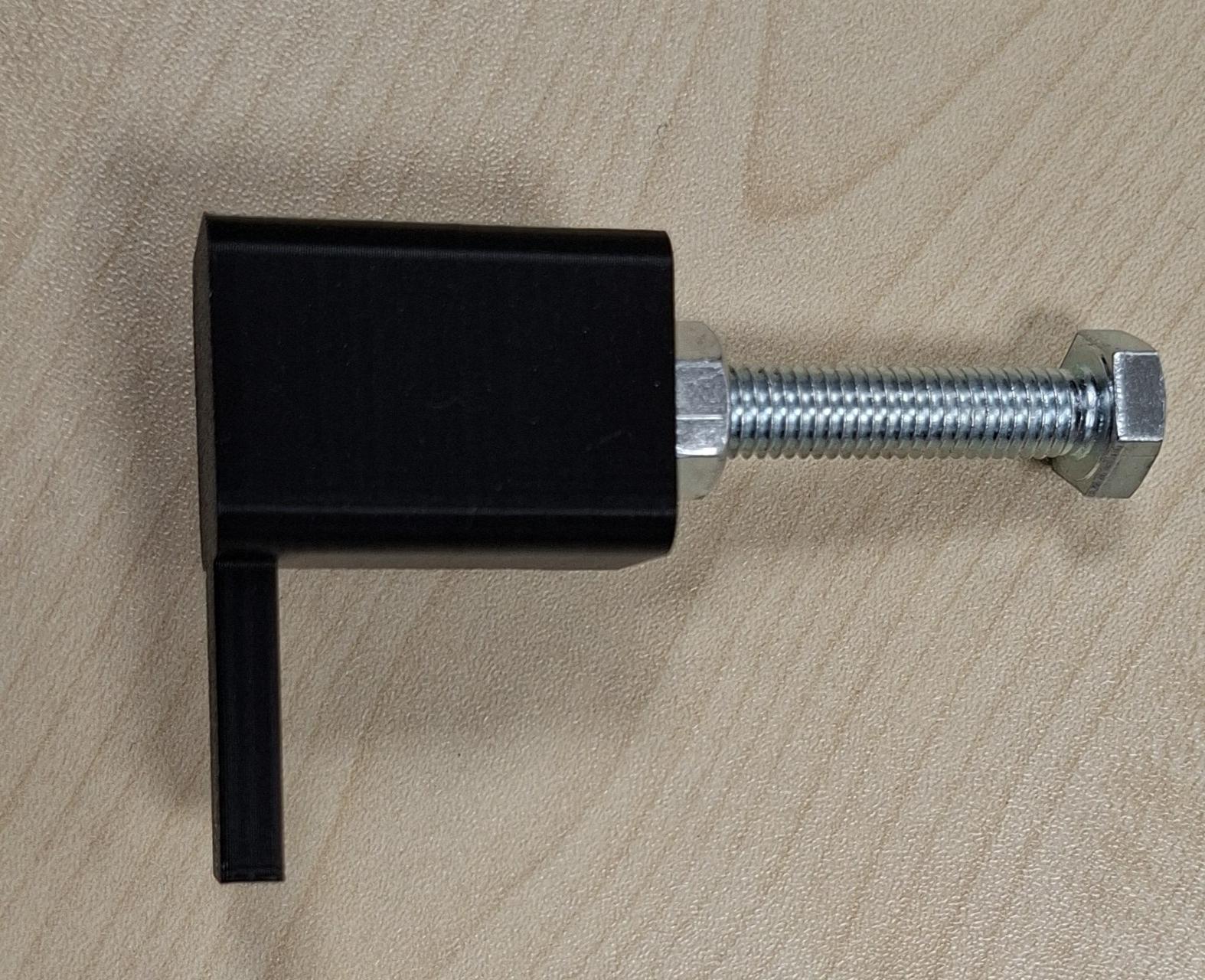
Fabio brought a fully 3D-printed, self-designed HDD bay for one disk.

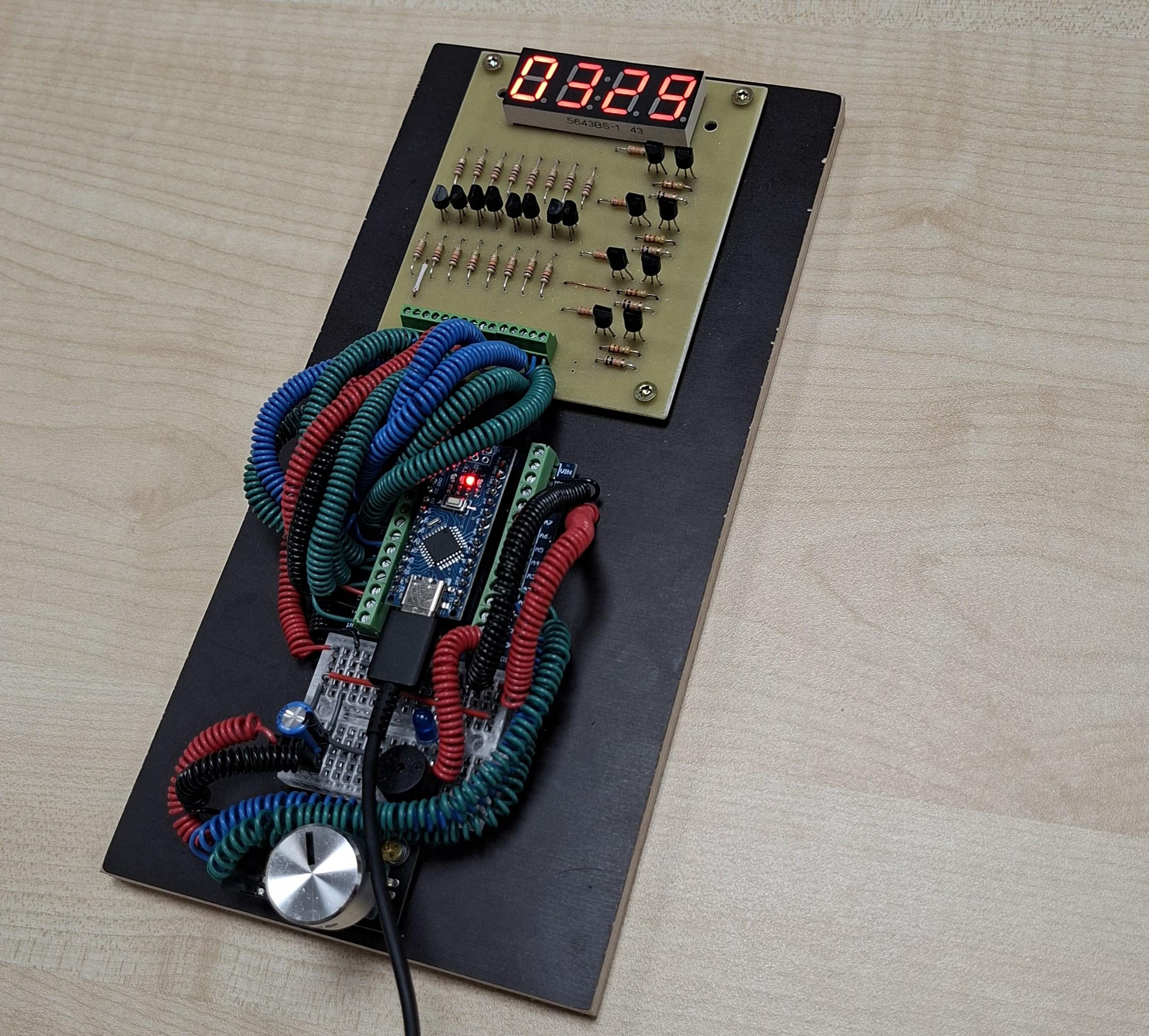
Helge decided that cooking eggs didn't look scary enough, so he built an egg timer that makes you think about which wire to cut to stop it from reaching 0. Very cool!
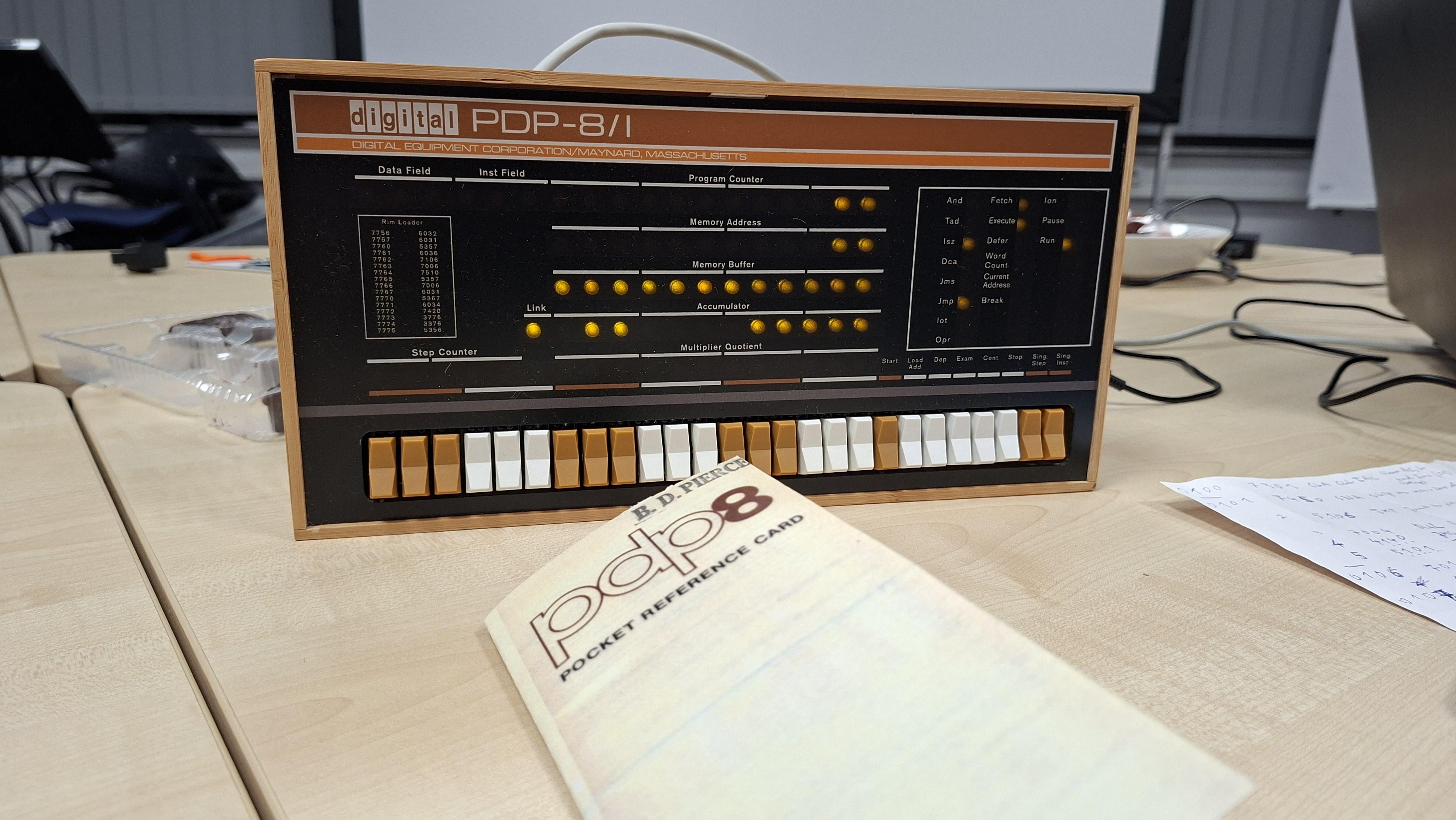
Andreas brought a PDP 8 Replica and showed us what user interfaces once looked like. using the switches at the bottom to enter commands and data, you can write into memory or even run complex programs. Other than the original one, this one uses a Raspberry Pi to emulate the old system.
Maggie was tinkering with her wings and was in the process of adding LEDs to them. The result can maybe be seen next month.

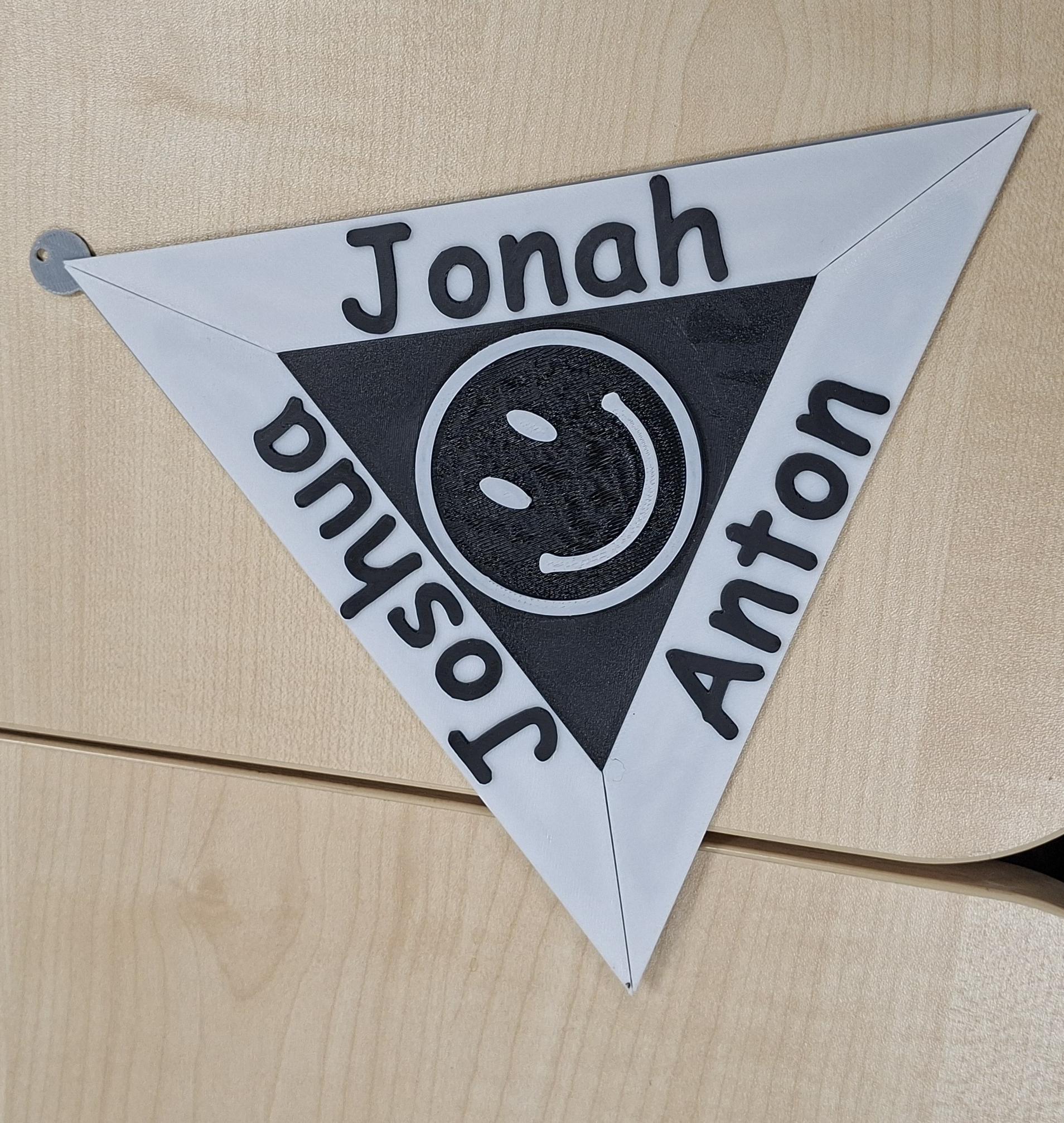
Klaus brought some 3D-printed and self-designed parts, for example, supports for his Carrera track or holders for his pegboard. Also, he showed that don't need an AMS or a printer with multiple nozzles to print with multiple colors. Instead, he paused the print and switched filaments to make a sign.
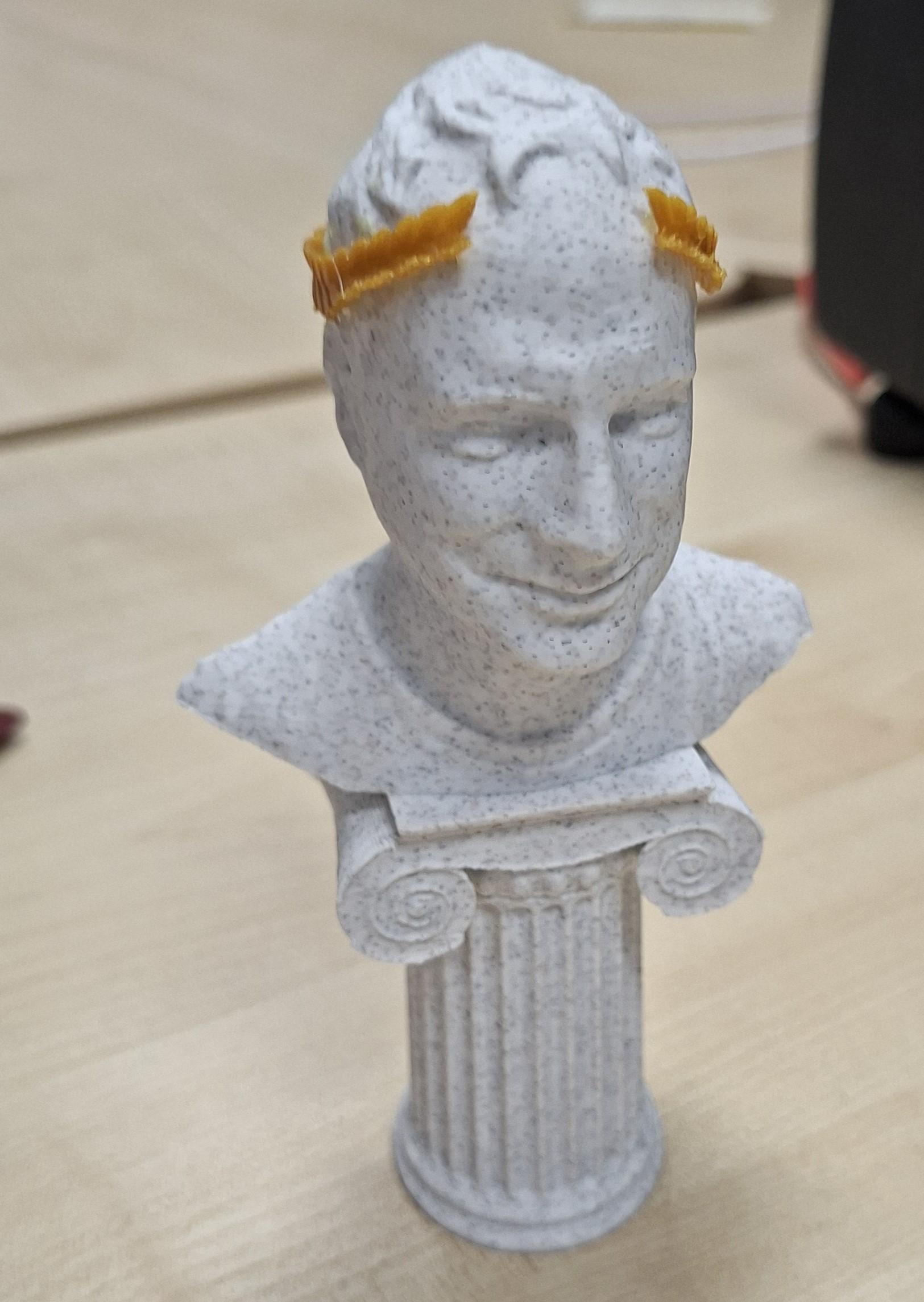
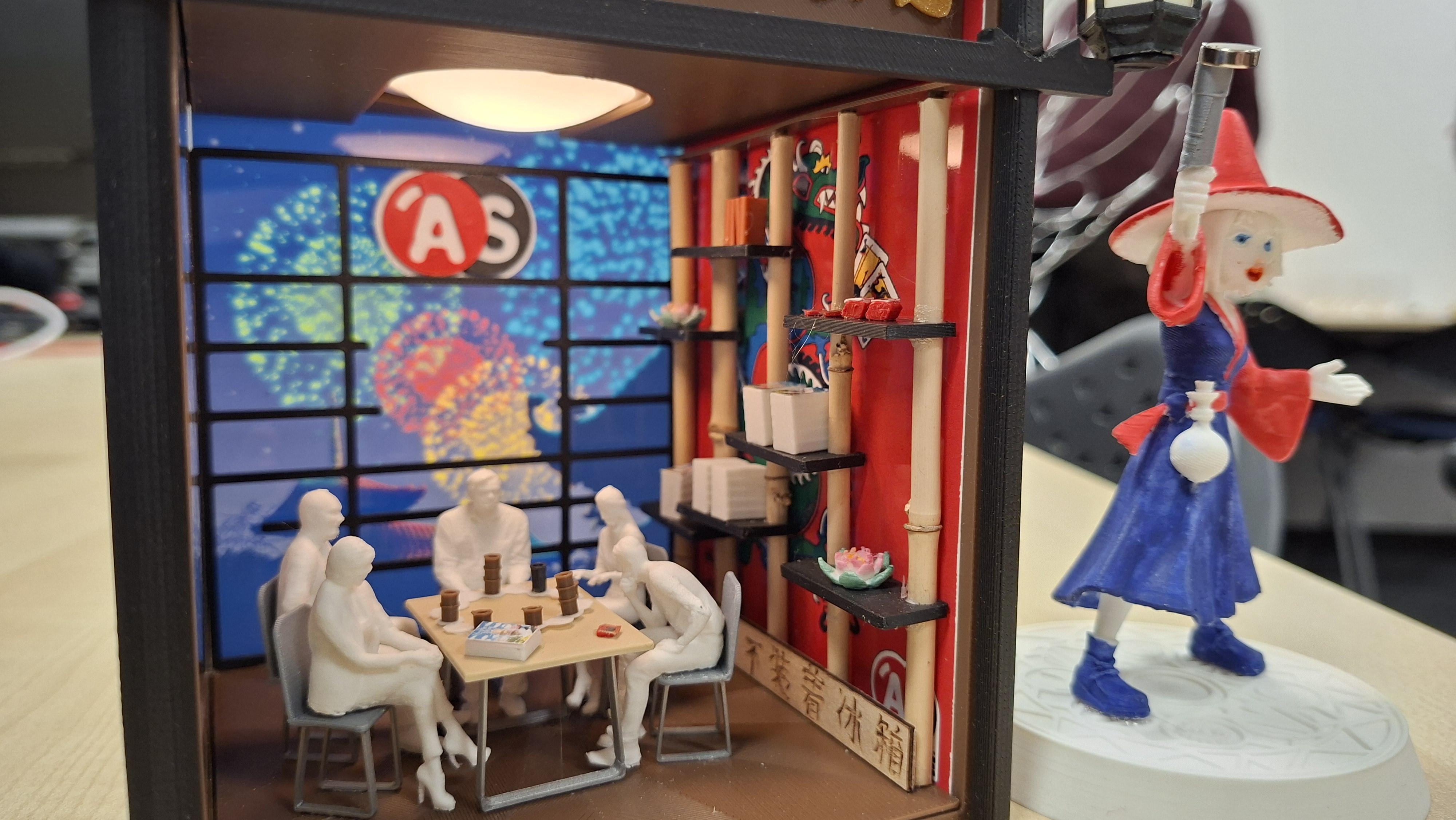
As always, Birgit brought many projects. Using an Image to 3D-model generative artificial intelligence, she created a bust of Jan Borchers. She also brought an amazing gaming lounge book nook that combines 3D-printed parts with laser-cut wood. The lamps light up with a magic (magnetic) wand. The magnetic LEDs are from BambuLab.
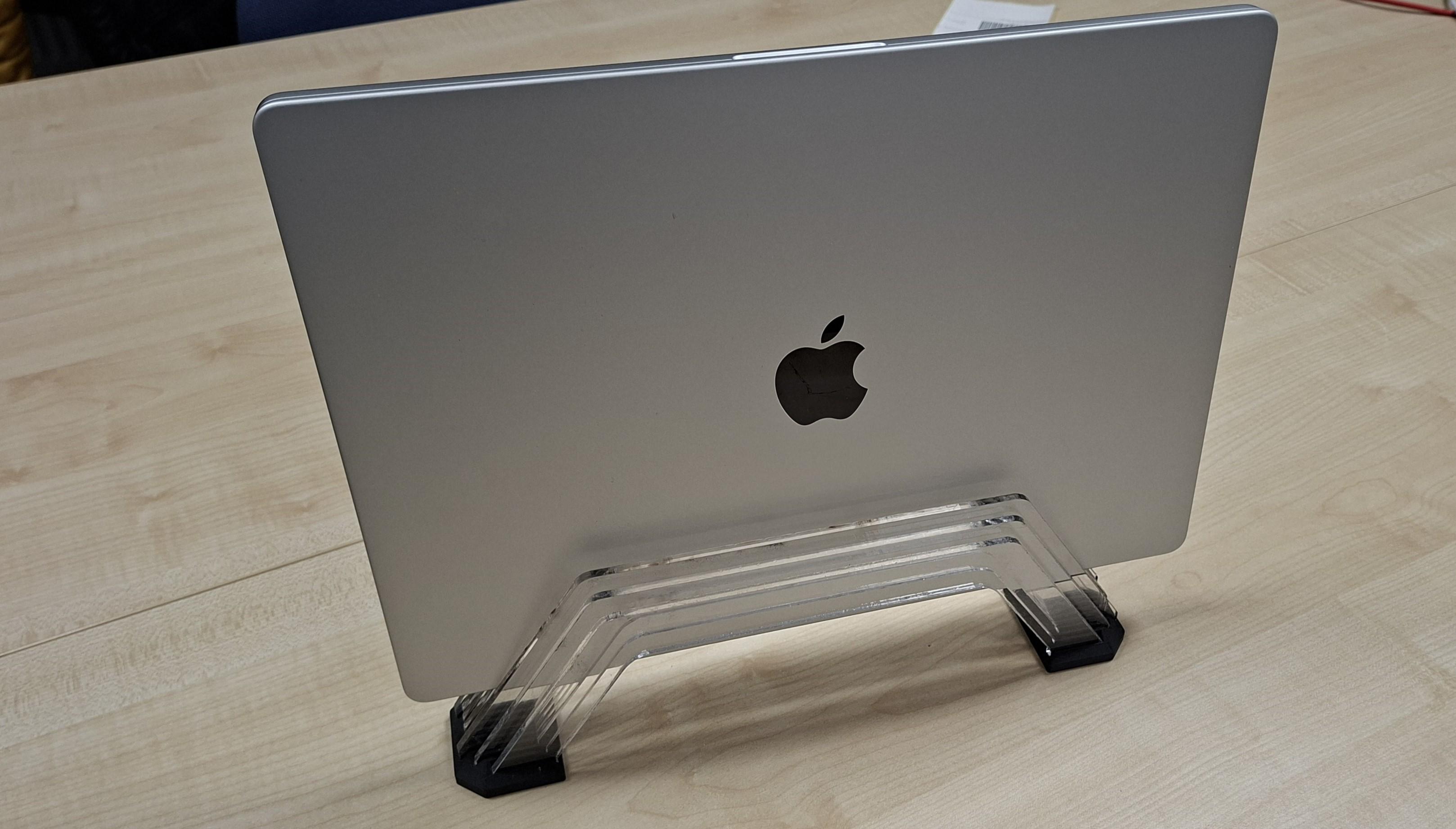
Birgit also created a map of where we meet, using Map My Memories to get a 3D model of a map, and even added a marker on it. For people who like to play Hitster, she also brought a stand you can put your phone on to more easily scan the playing cards. Also, her laptop stand is a classic.

Jan Borchers brought his Sinclair ZX Spectrum Next, an FPGA-based modern version of the classic ZX Spectrum home computer he had as a kid in the 80s. It was running modern 8-bit retro games like Tyvarian.
