

Design for Calibrated Trust in AI: Exploring Opportunities to Support Appropriate Mental Models When Interacting With Conversational AI
This workshop requires pre-registration and submission of a short document to us; we still accept submissions and notify authors swiftly.
Welcome to a half-day workshop at NordiCHI 2026, exploring how AI design choices can foster appropriate mental models in users, supporting more informed and balanced AI use.
 Source: Wikipedia
 This article will be updated with further information.
When: Sunday, October 4, 2026, 09:30–13:00
Where: Åbo Akademi University, Vaasa, Finland
How to register: We ask participants to submit a brief document outlining their background, motivation, and ongoing research (if applicable).
- Your submission should follow the single-column ACM template and be a PDF document of 1-5 pages (excluding references)
LaTeX Template here
Word Template here - Non-anonymized papers must be submitted in PDF format and sent via email to Paul (Deadline 5th of August).
This email address is being protected from spambots. You need JavaScript enabled to view it. Subject: [Workshop NordiCHI] <Your Name> <Submission Title>
- The organizing committee will evaluate submissions based on their relevance and quality.
- Upon acceptance, at least one author of each accepted submission is required to attend the workshop.
Important Dates
- Submission Deadline: Come first, first serve
- Decision to authors: Within a few days after submission
- Registration Early Bird deadline: 17.08.2026
- Workshop: 04.10.2026
About the Workshop
Artificial intelligence is increasingly embedded in daily life, offering convenient support for tasks such as writing, brainstorming, and answering everyday questions. Yet its risks — from data security concerns to subtler effects like growing dependence, reduced creativity, and diminished critical thinking — often remain invisible.
While "responsible AI use" is widely advocated, we argue this responsibility cannot be achieved through education and disclaimers alone, but must be supported through design itself. AI systems should foster appropriate mental models in their users — an understanding of what AI is, its potentials, its limits, and its motivations.
This workshop brings together perspectives from computer science, psychology, design, and ethics to:
- Deepen understanding of failures caused by misleading mental models of AI
- Generate initial design strategies to foster more accurate mental models
- Build a research community for future collaboration — joint studies, funding initiatives, and publications
Get further information here.
Background
Conversational AI based on Large Language Models has become a major form of everyday AI interaction. People turn to systems like ChatGPT for health questions, relationship advice, learning, news, creativity, and more — often things they wouldn't ask anyone else.
The conversational metaphor underlying these systems can be deceptive. While interacting with an LLM resembles human conversation on the surface, there are crucial differences: eloquent language doesn't indicate certainty or solid knowledge, responses include no reliable cues about confidence, and systems are designed to confirm users and maximize engagement rather than offer the friction of an honest disagreement. The interest of AI service providers might be a system that is trusted and used more than competitors. The interest of users is a system that they trust only to the right amount.
This creates what could be called a doublebind: in the moment of interaction, the design says "treat me like a human, speak to me naturally." In the moment of failure, the message shifts to "remember I'm only a machine — you should have double-checked." We believe that calibrated trust cannot be achieved by education alone, but requires design that actively communicates uncertainty, limitations, and the non-human nature of these systems. We see this as a task for the research community.
Workshop Format
This is a 3.5-hour interactive workshop (including a 30-minute coffee break), focused on discussion and collaborative creation:
| Duration | Activity |
|---|---|
| 15 min | Introduction: organizers, workshop outlook, and key concepts (mental models, overtrust, calibrated trust, responsible use, deceptive design) |
| 30 min | Common ground: 90-second pitches from participants |
| 15 min | Activation: collecting examples of AI use failures (individual work, post-its, clustering) |
| 30 min | Exploration: group work tracing failures back to misleading mental models of AI |
| 30 min | Coffee break |
| 30 min | Creativity: group work on design opportunities and rapid prototyping (visual prototypes, role plays) |
| 15 min | Presentation: each group presents and discusses their ideas |
| 15 min | Wrap-up: most promising ideas, syntheses, takeaways |
| 15 min | Community building & outlook: next steps, collaborations, joint publications, funding |
Organizers

Sarah Diefenbach is professor for economic psychology and human-computer interaction at LMU Munich and addresses user experience and the design of interactive products from a psychological perspective. Her research has continuously stimulated discussions in the (Nordi)CHI community. Sarah will moderate and coordinate the workshop and will particularly contribute with her expertise in HCI design and evaluation from a psychological needs perspective.
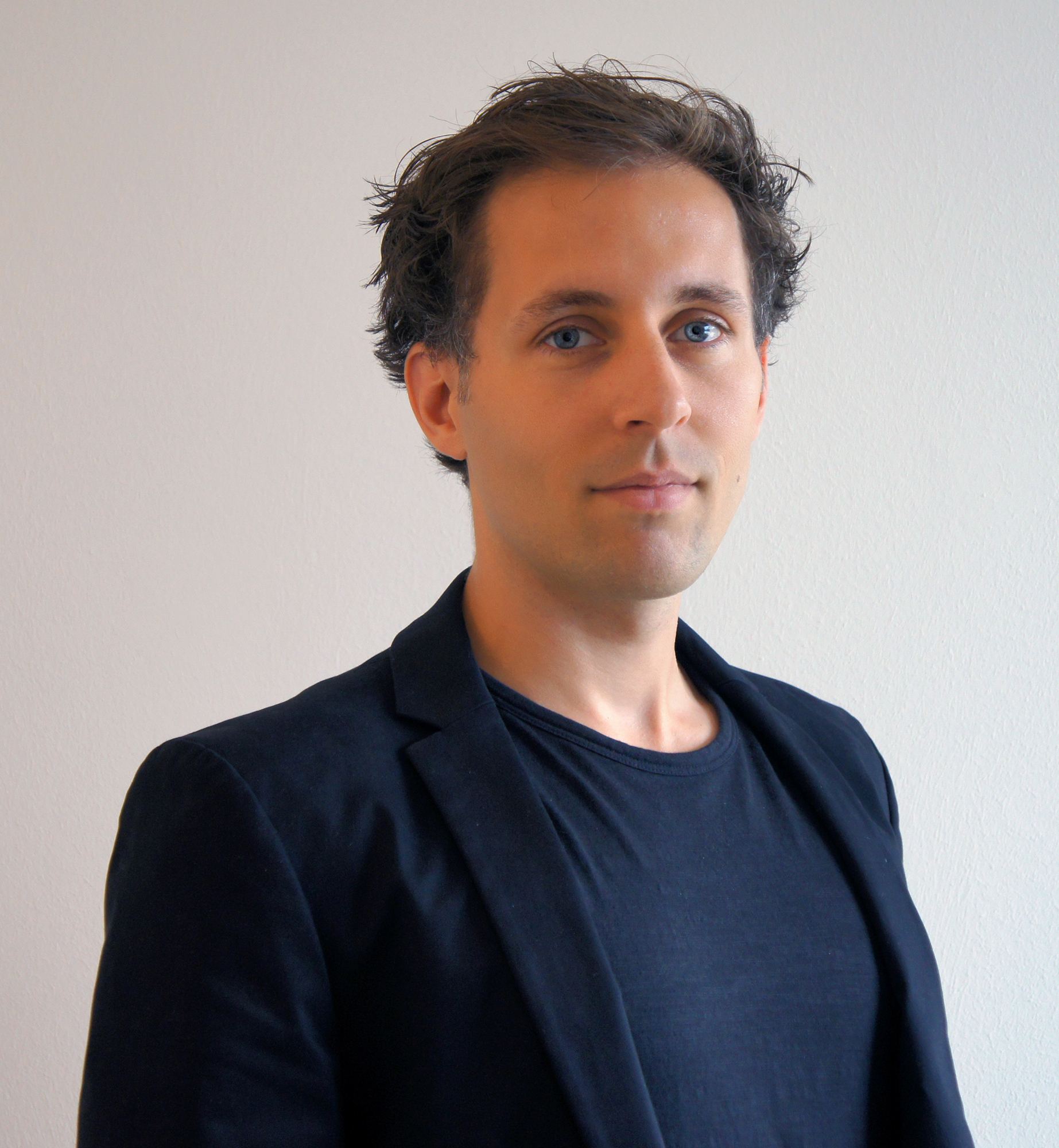
Daniel Ullrich is a postdoctoral researcher at the Chair of Human-Computer Interaction at LMU Munich. His research focuses on AI and Human-Robot-Interaction (HRI) and the critical analysis of societal impacts of technology. Daniel developed several methods for UX design and evaluation (e.g., INTUI questionnaire. robot impression inventory) the Cassandra method for responsible design based on dystopian visions which could also be applied in parts of the workshop.

Paul Preuschoff is a doctoral candidate in the field of Human-Computer Interaction at RWTH Aachen University. His research focuses on human centered design, social experiences, deceptive patterns and the impact of AI access on creativity, enjoyment and social interaction. He currently investigates different methods to incorporate AI indirectly into creative processes in order to expand them, while limiting AIs negative effects.

Lara Christoforakos is a postdoctoral researcher at the chair of economic psychology and human-computer interaction at LMU Munich. Her research focuses on technologies for behavior change. She takes a critical perspective on emerging technologies, particularly highly agentic AI systems that may shift responsibility away from users and contributes to the workshop by raising critical questions about these developments and implications for user autonomy and design.
Get Involved - We want YOU!
We welcome contributions from researchers and practitioners across computer science, psychology, design, ethics, and beyond.
Contact:
Sarah Diefenbach –
Daniel Ullrich –
Paul Preuschoff –
Lara Christoforakos –